Tuesday, September 22, 2009

Dipika Rathi


PREVENTION BETTER THAN H1N1

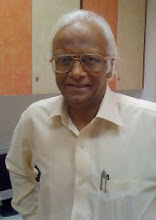
The Magsaysay Award-winner, Dr Alan Alappat, spoke to Creative Thinker on the pandemic:
In times of pandemic, I see around 200 patients on a single day at OPD. Of course, I wear a mask and continue my daily routine. It is important to keep the patients correctly informed.The symptoms of H1N1 are:
  • Running nose, cough, headache, fatigue and fever
  • Nausea, vomiting and diarrhea in some patients
  • Pneumonia and seizures in severe cases( mortality reported at 6%)

The best preventive is vaccination, which unfortunately is not yet available. But a few preventive measures can help stall the spread of the epidemic:

Cover your nose and mouth when sneezing or coughing, with a tissue or a handkerchief. If one doesn't have a tissue, cough into your upper sleeve and not into your hands. Dispose oFf the used tissues in a trash.
Wash your hands after you cough or sneeze, with soap and water, and often, if possible, with an alcohol- based hand cleaner. Avoid touching your nose, mouth and eyes.


If you get sick, remain off from work/ school and stay at home. Avoid mixing with others, especially a crowd, at least for 24 hours. After the fever comes down, you can reduce the medication.
Face masks and surgical masks do prevent infection from spreading.
Clarification: Respirator refers to N95 or high filtering facepiece / mask device.Close contact is defined as 6 feet distance.
You cannot get swine flu from pork or pork products.If you suspect influenza, consult your doctor and take Tamiflu or Relenza as a preventive measure or even as treatment. If you have contacted H1N1 patients, or health workers who are susceptible, within 48 hours you can stall or prevent morbidity.
Sandeep Shrivastwa


A DAY IN THE LIFE OF DR ALAN

He wakes up around six. A small prayer of thanks giving, sitting in the bed. Thanking God for everything in life, till that moment. Asking God for continued help. And asking Him to heal his patients.
Some 10 minutes of exercise. At the clinic at Orlem, Malad East, Mumbai, around 7.45 a.m. See patients till 1.30 in the afternoon. But during pandemic, till 3 p.m. After lunch, writing letters, sending e-mails, phone calls. Back at the clinic around 5 p.m. and work till 11p.m. But during pandemic, do not leave before midnight.
Every alternate Sunday, get up at five and leave at six for the Adivasi Service Project Free Clinic, 125 km. away from Mumbai. At the clinic from 9 a.m. to 12 pm, and return by 4 p.m. for the evening church service. Usually sleeps 4 to 5 hours a day.

‘‘My aim as a doctor is to help as many sick people as possible, relieve them of their pain and anguish. I enjoy helping the poor, though there is little money. I would go out of my way to help a poor patient than a rich patient who can afford the best of medical treatment. I enjoy working in the Adivasi free clinic in Talwada, and the Free Prayatna Clinic in our church every Thursday afternoon.
‘‘The greatest achievement of my life is that I could execute my service projects without break. Help from friends, old and new, has been overwhelming.
‘‘My role model is Jesus Christ whose immense humility, suffering, hard work and selflessness in healing the sick, poor and suffering has motivated me to follow His footsteps.

‘‘My LORD has said: ‘Whatever you have done to the least of my brethren, you have done unto me’. ‘‘My life has been fruitful by God's grace. At 60, I enjoy good health but swallow 25mgs. of Losartan every day to prevent my B.P. going up. I walk from Mumbai to Shirdi every year, covering some 280 km. And I have been doing it for the last 18 years. The six days of climbing the Kasara ghats on the way is a blessing in disguise. My Mom is 83 years old, and does not touch medicine; she goes to church on her own every day. ‘‘My wife Dr Shobha, and our son Dr. Dennis and daughter-in-law Sumi help me. Our grandchildren Jasmine (6) and Alisha (2 months) are a blessing. My daughter Dr. Lisa and son-in-law Vinod with their son Aryan (2) are settled in Kansas, USA. WHAT MORE DO I WANT FROM GOD!’’

Monday, September 21, 2009


Tista Sengupta


MONSTER THAT DEVOURS CHILDREN


Twelve-year-old Abishek is tormented by fever, cough, diarrhea and acute pain. He is not alone. Two-year-old Ramesh and four-year-old Akash and six-year-old John are tormented, too. All have one thing in common AIDS. They are among the hundred children living in Mukta Jeevan (Veloli, Asangaon) on the Mumbai- Nasik Road, and Ish Krupa (Naya Jeevan) on the highway immediately after Shahapur crossing.

These flowering children, with twinkling eyes and singing and smiling whenever they can, greet visitors. When they hear ‘Doctor Uncle is coming,’ they ran to meet him. “I wish I had more than 10 fingers,’’ says Dr Alan Alappat, who visits them at least twice a year. ‘‘My heart goes out to those children who are unable to come to me because they are bed-ridden with high fever or diarrhea. I try my best to cheer them up.

‘‘They are fond of talking about the movies they watch on TV; John complaining Akash fights with him all the time, Sunita coaxing me to scold Ramesh for being naughty. I love their beaming smiles, each one trying to push the other to come to me.

‘‘The parents of these children died of AIDS, a few in their last stages. Sister Jayshree is their
mother, bathing them, clothing them and serving food to them. These children need extra care
since they have no resistance. That is why HIV/AIDS positive persons are vulnerable to any
disease.

‘‘Last June, I got a call from the Sister saying the children wanted to play in the rain. I bought 25 umbrellas and raincoats and sent them to Mukta Jeevan. Soon we got the message: “The children are dancing and playing in the rain”.

‘‘We cannot cure these children; they will soon die! We cannot give them a golden tomorrow. But at least, we can give them a dignified life today.

‘‘The 13-year- old Lakhan spoke on the World AIDS Day: “ Please don’t make the mistake my parents made! This message is for society at large: Do not indulge in premarital, extra- marital and clandestine sex.

‘‘I thank God for giving me good friends who support me in this endeavour.’’


Dr. Alan Alappat
28405117 28072966


TIPS ABOUT AIDS


Aquired means not inborn but passed from one person to another; it could be from mother to child.
Immune means relating to body’s immune system which provides protection from disease causing germs.
Deficiency means lack of response by the immune system to germs.
Syndrome means signs and symptoms of one or more diseases.

HIV stands for Human Immunodeficiency Virus, which attacks and, overtime, destroys the body’s immune system that leads to AIDS.

Symptoms of HIV infection are severe unexplained loss of weight; common diseases like long standing cough, fevers, loose motions, swollen glands not being cured and relieved with medications.

Aids brings in severe and oftener attacks of Tuberculosis, Pneumonia, Herpes, Types of Cancer.
AIDS virus is found in body fluids e.g. semen, vaginal secretion, blood and breast milk of infected persons.

Window period is the time that the body takes to produce measurable amounts of antibodies after getting infection of HIV, this period varies from 2 to 12 weeks or may be longer.
Period between infection with HIV and the beginning of signs and symptoms related to AIDS varies from 6 months to 8 years or more.

Period between full blown AIDS and death may be as short as 6 months to as long as 2 years or more.

HIV is transmitted in 4 common ways:
(1)Unprotected heterosexual or homosexual intercourse with an HIV infected person.
(2) HIV infected blood transfusion.
(3)Sharing of needles, syringes, shaving razors, toothbrushes or any skin piercing instruments or equipment used by HIV infected person which could have been contaminated with infecting body fluids.
(4)HIV infected mother to infant, during pregnancy, delivery and breast milk.

Blood tests: Elisa Test (primary confirmation) …Western Blot Test (final confirmation)
HIV is not transmitted by air, water, foods, toilets, urinals, swimming pools, cutlery, glasses, cups, coughing, sneezing, sitting together, touching, shaking hands, pets, mosquitoes and other insects.

There are no drugs to cure AIDS, but anti-retroviral drugs to delay effects of AIDS virus and thus give sizeable protection to AIDS patients. Many of the diseases associated with AIDS can be treated successfully.

Monday, September 7, 2009


Sandeep Shrivastwa sandeep.andes@gmail.com

Shaily Bhusri shailybhusri@gmail.com

LEADER EXTRAORDINARY!
In politics, victory is history and defeat shattering. The architect of BJP’s defeat,L K Advani, has all the qualities of a leader by their conspicuous absence. A sense of time, a grand vision, decisiveness, the ability to inspire and command respect, the ability to win trust and, above all, the ability to unite are qualities you find in any leader, be it Churchill, Lenin, Napoleon, Kennedy or Nehru, whom the part ideologues never grow tired of berating.

All Advani’s troubles stem from not quitting at the critical moment and not being decisive but dithering. In all his political career, or more precisely before, during or after the general election, he had no grand vision to offer. Instead of rising to Himalayan heights during the campaigning, he went on sniping at Prime Minister Manmohan Singh who was doing a reasonably good job under great constrains. His credibility was strained more than once challenged by his own party men. His machinations won him enemies in his party, sowing seeds of mistrust. Advani is truly a leader half a century out of date. In a fast changing world, he refused to change and found himself hanging on to a cliffhanger. So much for Advani but Rajnath Singh does not merit our time and space except to remind ourselves that he was in charge of UP assembly elections that ensured the emergence of Mayawati and the decimation of BJP. With the same precision, Singh ensured Sonia Gandhi’s victory and the decimation of his own party at the general election. Greater service, no man can do to his party.

During this crisis time, one lady kept her silence. A leader is one who knows when to speak and when to be silent. Her silence was golden. And Sushma Swaraj reaped a rich harvest for her silence. But Arun Jaitley cannot keep his mouth shut that long. The media savvy urbane glamour boy has a penchant and style that belong to the 21st century. He has no political roots or mass base like Narendra Modi but he can articulate and give a sense of direction to the party that needs leadership. Just imagine, one book triggered the crisis – that too, not on Godse but on Jinnah!

Monday, August 31, 2009


MOST TALKED ABOUT BOOKS
Some authors are more famous than their books, but some books overtake their authors. Books by Amartya Sen and Shashi Tharoor are read for what they are than for any other reason. Sen’s Idea of Justice and Tharoor’s Shadows across the Playing Field are a ‘must’ read.
One billion Indians and 30 millions of injustice cases pending! The tiny state of Manipur has 10000 cases are pending in the Guwahati High court!
That’s not all. The National Human Rights Commission receives more than 75,000 complains a year; the National Crime Bureau registered 27,000 cases of violence against Dalits in 2006, 32,461 cases of murders, 19348 rapes, 7618 dowry death and 36617 molestation cases.
Amartya Sen speaks on the land acquisition by the West Bengal government for Nano plant. He thinks acquisition should be the last resort because while it may be justified as a greater good, when it benefit some and costs others, then the question of what you are going to do for those paying the price arises.
In a society where agriculture is the main employer, land is what you rely on. When you are poor, your life is insecure and you don’t want to be told that your life will go much better if you give up your land. It is not just a sentimental attachment, but rather it’s the thought that “my god! This is the basis on which I live.”
He was supportive of Bengal’s industrialization but they made two mistakes. More public discussion would have helped alleviate the fear for those for whom there would be some loss involved. Basic policy was right. Without industry West Bengal would continue to remain poor, and even if a new government comes, the people who come in will face exactly the same problem. And having created a situation where the whole industrialization process was seen with a sense of suspicious then you have to face the question that what are you going to do? To leave the West Bangle to its poverty or to face the anger of the people was the question?
Justice is a complex idea, but it is important to understand that justice has much to do with everyone being treated fairly. The leading political philosopher, John Rawls, neglects a couple of important connections. One neglect is the central recognition that a theory of justice has to be deeply concerned with how to reduce injustice in the world, rather than only with the identification of what a hypothetical “perfectly just society” would look like.
Second, analysis of justice has to pay attention to the lives that people are actually able to lead, rather than exclusively concentrating only on the nature of “just institutions.” In India, as anywhere else, we have to concentrate on removing injustices that are identifiable and that can be remedied.(Courtesy: G.S. Oinam)
The story of the turbulent cricketing relations between India and Pakistan has been told by Shashi Tharoor and Shaharyar Khan who make an instant cocktail of love of the game and diplomacy. Shashi Tharoor, whose comprehensive, entertaining and hard-hitting analysis of sixty years of cricketing history displays a Nehruvian commitment to secular values, which rejects sectarianism in sport in either country. Shaharyar Khan, a former Pakistan foreign secretary, writes compellingly of his pivotal role as team manager and then chairman of the Pakistan Cricket Control Board at a time when cricket was in the forefront of d’ tenet between the two countries.
The two authors trace the growing popularisation of cricket from the days of the Bombay Pentangular to the Indian Premier League. They show how politics and cricket became intertwined and assess the impact it has had on the game. The book is a celebration of the talent of the many great cricketers who have captivated audiences on both sides of the border. If politics and terrorism can at times stop play, the authors believe that cricket is also a force for peace and they look forward to more normal times and more healthy competition.
Jinnah simply refuses to die! When he has ardent fans like L K Advani and now Jaswant Singh, immortality is assured for Jinnah. Singh’s book is a roaring success in Pakistan and even in India for reasons of curiosity. Singh should privately thank Rajnath Singh and Advani for making his book a controversial sell.

Thursday, August 13, 2009


Rachit Anand


CAN WE LIVE IN PEACE WITH PAKISTAN?


Pakistan is the anti-thesis of India. It is created to checkmate India and to prevent India from becoming a superpower. It was a fitting reply – seen from the imperialistic perspective – to Gandhiji’s Satyagraha, which would have a domino effect on other Asian and African nations aspiring to be independent. The founding father of Pakistan, Mohammed Ali Jinnah, died a disillusioned death, seeing his dream turned into a nightmare. The subterranean forces it let loose were like demons let loose from hell, which no mortal could control. Leaders on either side of the border who held out the olive branch were stabbed in the back or literally stabbed. Prime Minister Liquat Ali Khan who met Jawaharlal Nehru in New Delhi to settle all outstanding issues between the two countries went back to Pakistan only to be stabbed to death on the floor of the House. Prime Minister Lal Bahadur Shastri paid a dear price with his life after signing an agreement with General Ayub Khan in Tashkent. The decline of Prime Minister Zulfikar Ali Bhutto began with the Shimla agreement. Prime Minister Atal Bihari Vajpayee’s dream of establishing peace with Pakistan ended up in the Kargil conflict.

Born in turmoil, Pakistan exists in perpetual turmoil of varying degrees. It has failed to produce leaders who can take the country out of its turmoil. And out of the turmoil came military dictatorship – Ayub Khan, Yahya Khan, Zia-ul Haq, Musharraf – and each time India hoped with the exit of one lasting peace would be established. Now we are living with the delusion of democracy in Pakistan. It is logical that what was born in turmoil will disappear in turmoil, judging from how Baluchistan, the largest province of Pakistan, is all set to repeat a Bangladesh. But what is disturbing is the nuclear arsenal that could fall into some insane hands! India needs to strengthen its intelligence system and counter-terror defence. Talks are the fig leaves Pakistan uses to cover its naked stratagem. Let not Islamabad capitalize on Manmohan Singh’s noble vision.
RUDRANI CHATTORAJ
rudranichattoraj@yahoo.com
DOWN WITH HEROES
LONG LIVE STATUES!

Not far from where once stood Nalanda and Taxilla, a woman was paraded naked! A great civilization that was the magnet of knowledge seekers of the ancient world has fallen as if from Mount Everest to the gutter. Not a day passes without someone somewhere being gang-raped in this country, someone somewhere being kidnapped and murdered, someone somewhere being acquitted of murder because the police were sloppy in presenting evidence, tacitly support the criminals. Not a single session of Parliament passes without ugly scenes and brawny displays, brains being a liability; and Kashmir, UP and Bihar MLAs could put the whole world to shame! While Kargil heroes are languish living on a measly Rs 5000 a month, millions are spent on statues to placate the towering egos of some. Brand new bridges develop cracks even before they are inaugurated, illustrating the principle of greed that rules our culture.
Where are the conscience-keepers of the nation gone? When one sees injustice all around, what shall one do? Be the perfect ostrich, be the martyr, be the leader who creates awareness and mass following before plunging into action? Any popular movement should begin with the right to recall MPs and MLAs who become a law unto themselves once elected for a five-year term. Another agenda should be to make the police accountable by forming citizens’ committees in every town and village and locality. Those cops who destroy evidence or fail to furnish them to shield murderers with political connection should be awarded life imprisonment. Bureaucrats notorious for corruption should be first exposed through the internet and later complained against if no action is taken by government. Internet journalism can be a mighty missile in fighting corruption and safeguarding the right of the citizen. Let a thousand blogs and websites bloom that democracy may flourish in this ancient land that was once a great civilization!